Choosing between tapping and thread milling is a critical decision in machining. Each method has its benefits and limitations. Understanding the nuances can significantly impact your project’s success. What is the difference between tapping and thread milling? This question lies at the heart of the selection process.
Tapping creates threads by cutting material with a rotating tool. It is efficient for producing internal threads quickly. However, tapping can be limited by the material type and hole size. Factors like thread depth and strength must be considered. On the other hand, thread milling involves a rotating tool moving along a helical path. This technique offers more versatility. It allows for deeper threads and works better with tougher materials.
Both methods have their place in machining. A careful evaluation of your specific needs will lead to better outcomes. Consider the part design, material, and required thread specifications. Each choice comes with its own set of challenges. Selecting the wrong method could lead to costly mistakes. Understanding these differences empowers you to make informed decisions in your machining processes.
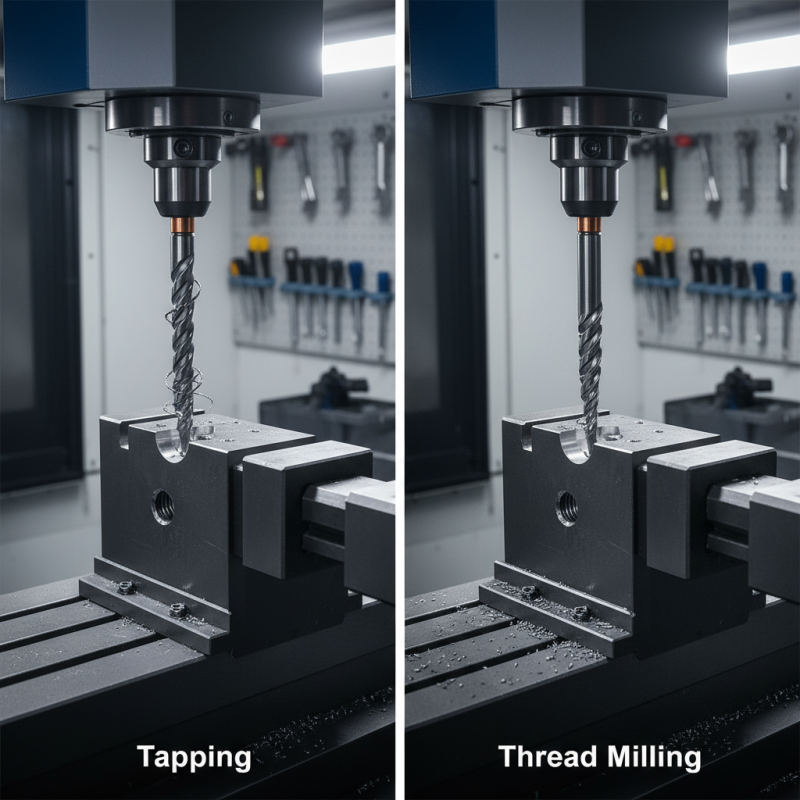
When choosing between tapping and thread milling, understanding their key differences can significantly impact manufacturing efficiency.
Tapping is often used for producing internal threads quickly. Studies show that tapping can yield a threading cycle time reduction of up to 60%. It is ideal for softer materials, where speed and simplicity are crucial.
However, it faces limitations in harder materials and larger diameters.
Thread milling, on the other hand, offers versatility. It can create both internal and external threads. According to a report by the Technical Association of the Pulp & Paper Industry, thread milling can achieve tighter tolerances and a superior finish.
This technique allows for adjustments in thread depth and pitch without needing multiple tools. It shines particularly in applications requiring precision, although it may be slower than tapping.
Both methods have their pros and cons. Tapping is efficient, but can sometimes lead to tap breakage, especially in tougher materials. Conversely, thread milling prevents tool breakage, but may require more setup time.
Each method has its own set of challenges and benefits, making the choice dependent on specific project requirements. Understanding these differences can help in selecting the most appropriate technique for various machining applications.
Choosing between tapping and thread milling can significantly impact your machining process. Both methods create internal threads but differ in specific applications. Understanding these differences is vital to ensure the right choice.
When deciding, consider the material type. Tapping works well with softer metals. Thread milling is better suited for harder materials. Think about the depth of the threads too. Tapping is often limited by depth, while thread milling can create deeper threads with ease. Additionally, consider your production volume. Tapping is quicker for high volumes, but thread milling offers more precision.
Tips: Always inspect your tooling regularly. Worn tools can lead to poor thread quality. For rigorous applications, test both methods on samples. This helps determine which technique suits your needs best. Make sure to account for potential chip removal challenges when choosing a method. Chip management can affect machine efficiency.
Reflect on your production capabilities. If you're equipped for milling, go with thread milling for versatility. If speed and volume are more critical, choose tapping. Each method has strengths and weaknesses, requiring careful consideration.
Threading is a critical process in manufacturing. Choosing between tapping and thread milling can significantly impact your project. Tapping is suitable for creating internal threads in softer materials. It is often used for quick production runs. This method provides good accuracy and finishes. However, tapping has limitations when it comes to hole depth and size. It can also lead to tool wear.
Thread milling offers greater flexibility for complex applications. It allows for the creation of threads in harder materials. This method can produce larger, deeper, and more accurate threads. It also enables multi-start threads, which are harder to achieve with tapping. The downside is that thread milling usually requires more setup time. This might not be ideal for small batch production.
Each method has its specific applications. Tapping is ideal for high-speed operations with softer materials. Thread milling shines in precision tasks, especially with tougher alloys. Consider the project's requirements carefully. The right choice depends on material properties, thread specifications, and production volume.
This chart compares the suitability of tapping and thread milling for various applications based on material type and hole size. The following data illustrates which technique is preferred in specific scenarios.
When deciding between tapping and thread milling, the tooling and equipment play a crucial role. Tapping generally requires taps suited for various materials, including high-speed steel or carbide options. Conversely, thread milling uses specialized cutters designed to create threads in different depths and sizes, offering versatility for complex geometries.
Understanding your machine's capabilities is essential. Not every milling machine is equipped for thread milling. Ensuring your equipment meets the specifications for desired thread types is vital. In tapping, poorly maintained equipment can lead to breakage or wear, frustrating the operation.
Selecting the right tools can be challenging. Each method has its advantages and complications. Tapping might be faster but can struggle with deeper threads. Thread milling, though slower, offers superior finish and precision. Assessing your production needs is vital. Think about your typical workload and long-term goals when making this decision.
When evaluating the cost of tapping versus thread milling, various factors come into play. Tapping generally has a lower initial investment. It often involves simpler machinery and requires less setup time. This makes it an attractive option for small-scale production runs. However, the cost efficiency can diminish with complex applications. For intricate threads, tapping may lead to a higher rate of tool wear. This typically increases operational costs over time.
On the other hand, thread milling offers greater versatility. It can produce various thread forms and can accommodate different materials. The initial costs are higher than tapping due to specialized equipment. Yet, the potential for reduced cycle times can offset these costs in many cases. Moreover, thread milling often leads to better surface finish and tighter tolerances. While some may view this as a superior approach, it also necessitates skilled operators, which can add to expenses.
Both techniques come with their challenges. Tapping may seem cost-effective but can be inefficient with materials that are difficult to machine. Thread milling, while promising better outcomes, may lead to overcomplication for simpler jobs. Assessing specific project requirements is crucial. Each method has its pros and cons, and there is no one-size-fits-all solution.
: Consider material type, thread depth, and production volume. Each method serves different scenarios.
Tapping is generally more effective for softer metals. It’s quicker for high production runs.
Yes, thread milling easily creates deeper threads compared to tapping. This is an advantage in many applications.
Tooling is essential. Taps and cutters must match the material. Poor tooling leads to subpar quality.
Test both methods on samples if possible. Assess thread specifications and material properties carefully.
Yes, chip management can impact efficiency. It’s important to consider this when choosing a method.
Tapping can wear tools quickly and has limitations on hole depth. This might not suit all projects.
Not always. Thread milling may require more setup time, which isn't ideal for small quantities.
Yes, ensure your machine meets the requirements for thread types. Poorly maintained machines can cause issues.
Thread milling often provides greater precision and finish compared to tapping. It’s essential for complex tasks.
In the article "How to Choose Between Tapping and Thread Milling?", an exploration of what is the difference between tapping and thread milling is presented. Tapping utilizes a rotating tool with cutting edges to create threads inside a pre-drilled hole, making it ideal for high-speed operations in softer materials. In contrast, thread milling involves a multi-tooth cutter that moves in a circular path to form threads, offering versatility for various thread forms and depths and enhancing precision in tougher materials.
Factors to consider when deciding between the two methods include material type, required thread accuracy, and the specifications of the tooling and equipment. Furthermore, the article discusses applications best suited for each technique, highlighting situations where one may outperform the other. A thorough cost analysis between tapping and thread milling techniques is also provided, helping manufacturers make informed decisions based on budget constraints and operational needs.

Tier Tool