Choosing the right coating can determine whether hardened-steel machining becomes stable or painfully unpredictable. Workpieces above 45 HRC resist cutting, generate intense heat, and punish weak tool edges. A coating must therefore match the cutting speed, insert geometry, coolant strategy, and interruption level. Titanium aluminum nitride, aluminum titanium nitride, and diamond-like carbon coatings behave differently under these conditions. The hardest coating is not always the best choice.
This introduction explains how to choose tool coatings for machining hardened steel through practical cutting logic. It considers oxidation resistance, thermal stability, friction, edge chipping, and coating adhesion. It also connects coating selection with real workshop details, such as dry cutting, interrupted cuts, and a glowing chip leaving the cutting zone. Small differences matter. A polished flute may reduce friction, while a tougher multilayer coating may survive interrupted milling more reliably.
Professor Dirk Biermann, a recognized machining researcher, offers a useful guiding principle: “Tool performance depends on matching the cutting process to the workpiece and tool system.” That principle deserves careful attention. Coating labels alone cannot predict tool life. In practice, operators must test cutting data, inspect flank wear, and record surface-finish changes. Even experienced machinists sometimes select an advanced coating too quickly. That is a mistake worth examining. A lower-cost coating can outperform a premium option when the edge preparation, speed, and workholding are better matched. The following discussion provides an evidence-based framework for making that decision with greater confidence.
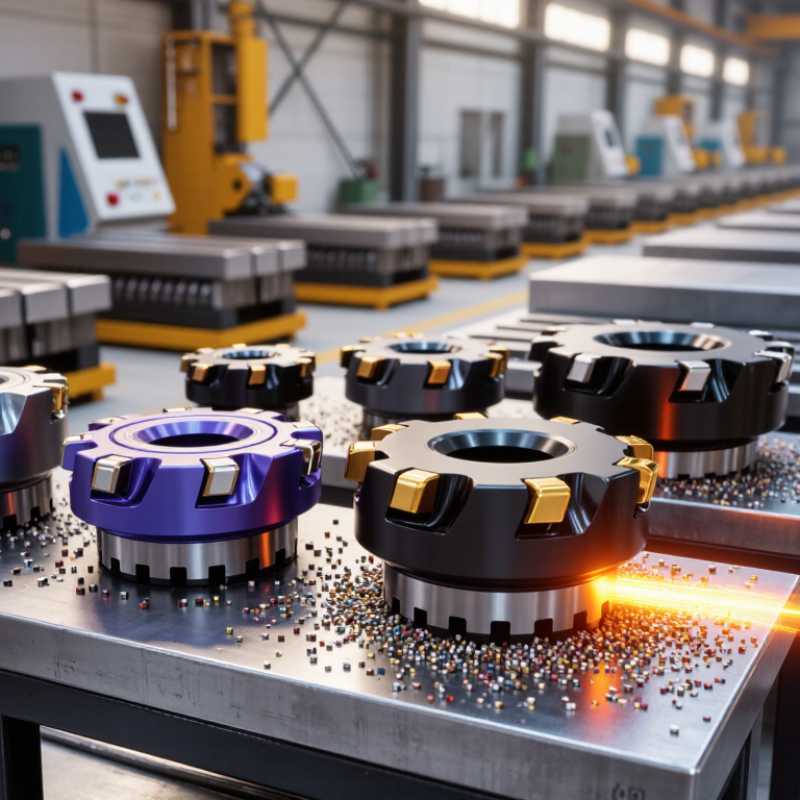
Tool coating changes how hardened steel behaves at the cutting edge. It reduces friction, limits adhesion, and slows crater wear during high-load machining. A hard coating also acts as a thermal barrier. However, it cannot rescue an unstable setup.
Published cutting studies in CIRP Journal of Manufacturing Science and Technology report tool-life improvements of roughly 30% to 100% after suitable coating selection. Results vary widely. Cutting speed, hardness, coolant, and edge preparation all influence the outcome. In practical trials, multilayer coatings usually measure about 2–5 micrometres thick. That thin layer can reduce direct contact between carbide and steel. It also helps protect the edge from abrasive carbides and hardened scale.
Heat matters greatly. A 2022 review in Surface and Coatings Technology reports that advanced nitride coatings can maintain useful oxidation resistance above 800°C. Some aluminium-rich structures perform beyond 1,000°C. These figures are not universal. A sharp edge may still chip when interrupted cuts generate sudden impact. I have seen operators blame the coating after choosing an unsuitable nose radius or feed rate. That judgment is often incomplete.
For hardened steel above 50 HRC, coating selection should match the cutting action. Finishing favors low-friction surfaces and controlled edge sharpness. Heavy milling needs stronger adhesion and impact resistance. Dry cutting may demand better thermal protection than light coolant-assisted work. The best coating is not always the hardest one. That is easy to forget.
Why Choose the Right Tool Coating for Hardened Steel?
Hardened steel can turn a routine cut into a severe test for any cutting tool. Materials above 45 HRC create high cutting forces and intense friction. Their hardened surface may feel smooth, yet it can act like fine abrasive grit. Heat builds quickly near the cutting edge. Interrupted cuts can cause tiny chips, edge rounding, or sudden tool failure. In my machining experience, a tool that survives soft steel may fail within minutes on a hardened die component.
Tool coating selection must match the cutting conditions, not only the material grade. Heat-resistant PVD coatings can protect the edge during dry or high-temperature cutting. A sharp, polished coating may reduce built-up material during lighter finishing passes. Tougher edge preparation can help with interrupted cuts, although it may increase cutting pressure. Speed, feed, depth of cut, and machine rigidity still matter. The coating cannot repair poor setup choices. I once blamed the insert after ignoring vibration from a weak workholding arrangement.
Tips: Check the actual hardness first. Use a rigid setup. Start with conservative cutting data. Watch the chip color and edge condition. A slight speed reduction may improve tool life, but not always. Test one variable at a time, and record the result.
| Hardened Steel Condition | Typical Cutting Challenge | Effect on the Cutting Tool | Coating Characteristics to Prioritize | Common Coating Direction | Priority |
|---|---|---|---|---|---|
| Approximately 45–55 HRC Pre-hardened or moderately hardened tool steel |
Higher cutting forces and reduced machinability compared with annealed steel. | Accelerated flank wear, higher edge stress, and increased risk of chipping when the setup is not rigid. | Good hot hardness, abrasion resistance, and adequate toughness. | Aluminum-titanium-nitride-based or similar hard PVD coating systems are commonly considered for carbide tools. | Medium |
| Approximately 55–62 HRC Hardened die, mold, and bearing steels |
High hardness creates substantial resistance to plastic deformation and makes interrupted cuts more severe. | Rapid flank wear, micro-chipping, edge rounding, and possible thermal damage at excessive cutting temperatures. | High-temperature hardness, oxidation resistance, low friction, and a well-supported cutting edge. | Heat-resistant PVD coatings based on aluminum-containing nitride systems are often suitable for carbide milling and finishing operations. | High |
| Above approximately 62 HRC Very hard hardened steel and hard-turning applications |
Conventional carbide tools may lose edge strength quickly, particularly during interrupted or unstable cutting. | Severe abrasive wear, notch wear, edge fracture, and shortened tool life. | Very high hot hardness and wear resistance; the substrate and edge geometry must also withstand impact. | Cubic boron nitride tools, sometimes with a protective ceramic or PVD coating, are commonly evaluated for hard turning. | High |
| Interrupted cutting Keyways, holes, slots, scale, or uneven stock |
The cutting edge repeatedly enters and exits the workpiece, producing impact loads and thermal cycling. | Chipping and fracture can occur before normal flank wear becomes dominant. | A tough coating-substrate combination, strong adhesion, and a cutting edge prepared for impact resistance. | A moderately thick, well-adhered PVD coating on a tough carbide grade is generally preferred over an extremely brittle coating system. | High |
| Continuous finishing cut Stable turning, milling, or drilling with limited interruptions |
Heat and abrasion accumulate over a longer engagement time. | Progressive flank wear, crater wear, and loss of dimensional accuracy. | Low friction, high wear resistance, thermal stability, and a smooth surface finish. | Hard, smooth PVD coatings with strong oxidation resistance are often appropriate when cutting parameters are controlled. | High |
| Dry or minimum-quantity lubrication cutting | Less coolant is available to control heat, so the tool-workpiece interface may operate at a higher temperature. | Thermal softening, oxidation, diffusion-related wear, and accelerated edge degradation may occur. | High oxidation resistance, hot hardness, and low friction at elevated temperature. | Aluminum-containing nitride coatings are frequently selected for their elevated-temperature performance. | High |
| Wet cutting with interrupted coolant supply | Repeated heating and cooling can create thermal shock at the cutting edge. | Thermal cracks may develop and later cause chipping or edge failure. | Good thermal-shock tolerance, strong coating adhesion, and a tough tool substrate. | A tough PVD system and a stable coolant delivery method are generally safer than relying on coating hardness alone. | Medium |
| Adhesive or difficult-to-machine hardened grades Hardened stainless or alloy steels with higher toughness |
Material may adhere to the cutting edge while still generating high cutting forces. | Built-up edge, irregular wear, edge chipping, and poor surface finish. | Low coefficient of friction, resistance to adhesion, and sufficient toughness. | A smooth PVD coating with anti-adhesive behavior may be more useful than choosing the hardest available coating. | Medium |
| High-speed milling of hardened molds Small radial engagement and high spindle speed |
Heat concentrates near the cutting edge, while tool deflection and runout can affect the result. | Flank wear, chipping at the tool corner, and dimensional errors in the finished cavity. | High hot hardness, oxidation resistance, uniform coating thickness, and precise edge preparation. | Fine-grained carbide with a heat-resistant PVD coating is commonly used when the machine, holder, and toolpath are sufficiently rigid. | High |
| Small-diameter tools End mills, drills, and ball-nose tools |
The cutting edge has limited cross-sectional strength and less capacity to dissipate heat. | Early edge rounding, deflection, breakage, and sensitivity to runout. | Uniform thin-film coverage, strong adhesion, low friction, and a sharp but stable edge. | A fine, consistent PVD coating is generally preferred; excessive coating thickness can reduce edge sharpness. | High |
| High tool overhang or low machine rigidity | Vibration and chatter increase impact loading at the cutting edge. | Premature chipping, uneven wear, poor surface finish, and unpredictable tool life. | Toughness and adhesion are more important than maximum coating hardness alone. | Use a tough carbide grade with a well-adhered PVD coating and reduce overhang before increasing cutting speed. | High |
| Stable, rigid setup with optimized parameters | Tool life is influenced mainly by cutting speed, feed, radial engagement, axial engagement, and heat control. | Incorrect parameters can produce premature wear even when the coating is technically suitable. | A coating matched to the dominant wear mode rather than selected by hardness alone. | Validate the coating together with the tool substrate, edge geometry, coolant method, and manufacturer-neutral cutting data. | Medium |
Note: Hardness ranges and coating directions are general engineering guidance. Actual tool life depends on steel composition, heat treatment, cutting speed, feed per tooth, depth of cut, tool geometry, machine rigidity, workholding, coolant delivery, and tool runout.
When machining hardened steel, coating selection should begin with hardness, heat, and friction. ASM Handbook, Volume 18, identifies PVD coating thicknesses commonly near 2–5 micrometres. This thin layer protects the cutting edge without significantly changing tool geometry. Coating hardness often reaches 20–35 GPa, helping resist abrasion from hardened workpieces.
Hardness alone is not enough. A coating with low friction can reduce built-up edge and cutting heat. Tribology studies published in Surface and Coatings Technology report friction coefficients roughly between 0.3 and 0.6 for common hard coatings, depending on load, temperature, and lubrication. That range matters. Lower friction may improve chip flow and reduce flank wear, but only when the coating remains stable at cutting temperature.
Industry machining trials commonly report tool-life improvements of two to five times after matching coating chemistry and cutting conditions. These figures are not guarantees. Interrupted cuts, poor workholding, and excessive feed can destroy a coating quickly. I have seen operators choose the hardest coating, then overlook toughness. The edge chipped before wear became the problem.
For hardened steel, evaluate coating hardness, oxidation resistance, adhesion, friction, and toughness together. A smooth surface can also reduce chip adhesion, especially during dry or minimum-lubrication cutting. The best choice is rarely the most expensive or hardest option. Test it against actual hardness, speed, coolant, and toolpath data.
Why Choose the Right Tool Coating for Hardened Steel?
How to Match Coatings with Machining Conditions
Coating selection should begin with the cutting condition, not the material label alone. Hardened steel above 50 HRC creates intense heat and abrasive wear at the cutting edge. For dry milling, an aluminum-rich nitride coating often provides strong thermal protection. Its surface can form a protective layer during high-temperature cutting. However, this choice may perform poorly when coolant repeatedly shocks the insert.
Interrupted cuts require a different balance. A tough multilayer coating can protect the edge when the tool enters and leaves the workpiece. Excessive coating hardness is not always helpful. A brittle edge may chip against a scale mark or hardened corner. I check the toolpath, workholding, and entry angle before changing the coating. Small details matter.
Cutting speed also changes the decision. At moderate speeds, a low-friction carbon-based coating may reduce built-up material and improve surface finish. At higher speeds, thermal stability becomes more important than friction alone. Edge preparation must match the coating. A sharp edge suits finishing, while a honed edge survives heavier engagement. The first trial is rarely perfect. I record flank wear, chipping, vibration, and the color of the chips, then adjust one variable at a time. A coating that worked yesterday may fail after a coolant change or a minor toolpath revision.
For hardened-steel machining, coating selection should balance abrasion resistance and thermal stability. TiN is suitable for moderate cutting temperatures, while TiAlN and AlCrN generally provide higher hardness and heat resistance for dry cutting, high-speed machining, and interrupted cuts. Values shown are representative published ranges; actual performance depends on substrate, coating architecture, cutting speed, coolant, and workpiece hardness.
The right coating can extend tool life and preserve accuracy when machining hardened steel. In hardened steel machining, heat and abrasion quickly damage an unprotected cutting edge. A suitable coating reduces friction and slows crater wear near the cutting zone. That difference appears in longer runs, cleaner surfaces, and fewer dimensional changes. After a long dry run, the tool should not look polished like glass. Controlled wear is the real goal.
Small details matter. Coating choice depends on hardness, cutting speed, coolant, and chip load. Aluminum-rich coatings often handle high temperatures during continuous cutting. For interrupted cuts, a tougher coating structure may resist chipping more effectively. However, coating alone cannot correct poor tool geometry or unstable workholding. A sharp edge can still fail when vibration strikes the insert repeatedly.
I have learned this through routine tool inspections. One early mistake was blaming the coating for rapid corner failure. We later found excessive runout and an uneven fixture. Actually, the coating was not the main problem. An inspection under magnification revealed tiny edge fractures before they reached the cutting corner. That lesson changed our process. Measure tool runout. Record wear patterns. Review cutting conditions before changing the coating. Even experienced machinists can choose too aggressively when a slower, controlled test would provide better evidence.
Evaluate hardness, heat resistance, friction, adhesion, oxidation resistance, and toughness together. Hardness alone is not enough.
Many physical vapor deposition coatings measure about 2–5 micrometres thick. This layer protects the edge without greatly changing tool geometry.
Lower friction can improve chip flow, reduce cutting heat, and slow flank wear. The coating must remain stable at cutting temperature.
No. A very hard coating may chip during interrupted cuts. Toughness can matter more when vibration strikes the edge repeatedly.
Matching coating chemistry with cutting conditions may improve tool life two to five times. These figures are not guarantees.
Check workpiece hardness, cutting speed, feed, coolant, chip load, toolpath, and workholding. Excessive feed can destroy a coating quickly.
It can slow wear near the cutting zone, helping maintain cleaner surfaces and stable dimensions. Wear still needs regular measurement.
Uneven fixture contact, excessive runout, vibration, and tiny edge fractures may cause rapid failure. I once blamed the coating too quickly.
Yes. A smooth surface can reduce chip adhesion and built-up edge. The result depends on temperature and cutting stability.
Test it under actual speed, coolant, hardness, and toolpath conditions. Record wear patterns and inspect the edge under magnification. A slower test is often wiser.
Choosing the right tool coating is essential when machining hardened steel, where high cutting forces, heat, abrasion, and work hardening can quickly reduce tool performance. A suitable coating acts as a protective barrier, improving resistance to wear, heat, friction, and edge damage while helping the cutting tool maintain its geometry. Understanding how to choose tool coatings for machining hardened steel requires considering the material hardness, cutting speed, feed rate, depth of cut, and whether the operation is continuous or interrupted.
The best coating should match the specific machining conditions rather than follow a universal solution. Properties such as thermal stability, toughness, low friction, and resistance to adhesive or abrasive wear can improve tool life, surface finish, dimensional accuracy, and process consistency. By selecting a coating that balances hardness with toughness and suits the cutting environment, manufacturers can reduce tool changes, control production costs, and achieve more reliable results when working with hardened steel.

Tier Tool