Choosing between PCD and carbide cutting tools is rarely a simple question of price or hardness. In real production, tool life depends on the workpiece, cutting speed, feed rate, machine rigidity, coolant, and operator practice. A PCD tool may perform exceptionally well on aluminum, copper, graphite, wood composites, and other abrasive nonferrous materials. Carbide remains more adaptable, especially when cutting steel, cast iron, or interrupted surfaces.
So, how long do pcd cutting tools last compared to carbide? In suitable applications, PCD tools can last several times longer than carbide tools, sometimes delivering dramatically more cutting time before wear affects accuracy or surface quality. However, that advantage is not universal. A PCD edge can chip when exposed to impact, contamination, or unsuitable cutting conditions. Carbide may wear sooner, but it often offers a lower initial cost and simpler replacement process.
The comparison is not perfectly clean.
Experienced machinists usually judge tool life by flank wear, burr formation, dimensional drift, and surface finish. For example, a PCD router cutting laminated panels may still produce a clean edge after long production runs, while carbide may show visible rounding much earlier. Yet one poorly aligned spindle can damage either tool quickly. Manufacturer recommendations provide a useful starting point, but shop-floor testing remains essential.
This article examines practical tool-life differences, cost implications, and application limits. It also questions a common assumption: the tool lasting longest is not always the tool delivering the lowest cost per finished part.
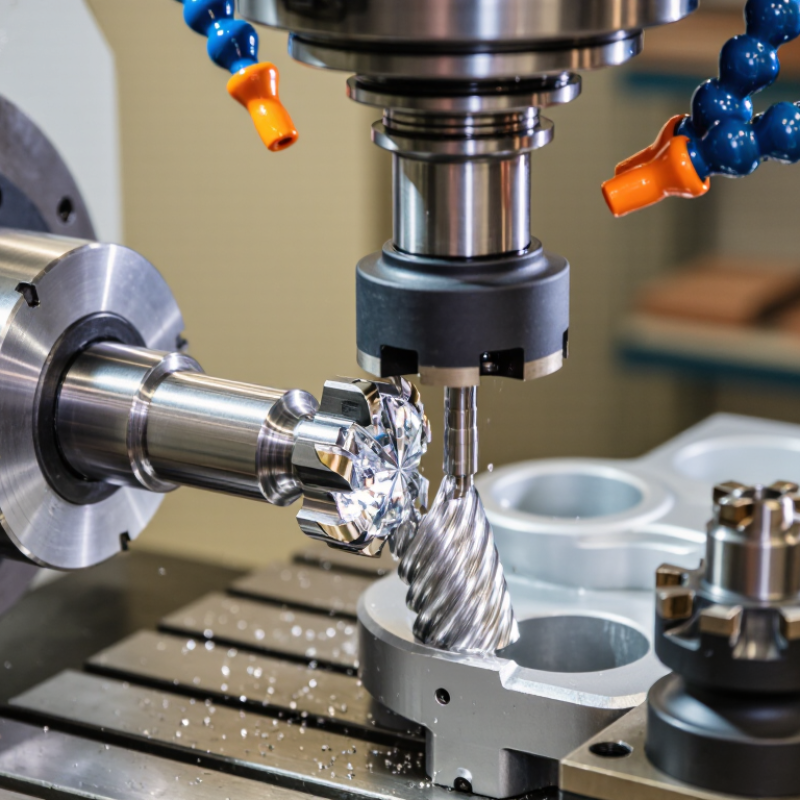
PCD vs Carbide Cutting Tools Which Lasts Longer?
What PCD and Carbide Cutting Tools Are
PCD, or polycrystalline diamond, is a layer of synthetic diamond particles bonded to a carbide substrate. Manufacturers braze or sinter this cutting layer onto a tool body. Its diamond structure resists abrasive wear extremely well. PCD tools often cut aluminum, wood composites, laminates, and other nonferrous materials.
Carbide tools use hard carbide particles held together with a metallic binder. They offer a practical balance of hardness, toughness, cost, and versatility. Carbide can machine steel, cast iron, stainless alloys, plastics, and many nonmetallic materials. However, its edge usually wears faster when cutting highly abrasive materials.
Longer life depends on the workpiece, speed, feed, coolant, and machine stability. PCD may last many times longer in abrasive aluminum or composite production. It is not automatically the better choice. Ferrous materials can react unfavorably with diamond at elevated cutting temperatures. Carbide is often the safer option there.
Tool life is rarely a simple race. A sharp PCD edge can produce a clean surface while reducing tool changes. Carbide may remain preferable for interrupted cuts, vibration, or uncertain shop conditions. Small chips, poor clamping, or excessive heat can damage either tool. The practical answer needs measurement. Check edge wear, surface finish, cutting noise, and cycle time instead of trusting a general claim.
PCD vs Carbide Cutting Tools: Which Lasts Longer?
Tool durability is not measured by calendar time alone. In machining trials, engineers record cutting length, removed volume, and usable edge time. They also define failure before testing begins. A common criterion is flank wear, often recorded as an average wear land in millimeters. Crater depth, edge chipping, surface finish, and cutting force matter too. No test is perfectly clean.
A fair comparison uses the same workpiece, cutting speed, feed, depth, coolant, and tool geometry. Wear should be checked at fixed intervals with a microscope or tool presetter. PCD often resists abrasive wear in nonferrous composites, while carbide may handle interrupted cuts better. The result depends on grade, edge preparation, and cutting conditions. “Lasts longer” changes when failure means poor finish, excessive force, or lost dimensional accuracy. A PCD edge may still cut but leave a rough surface. A carbide edge may show wear yet remain stable.
A practical trial should record parts per edge, tool changes, rejected parts, and actual cutting minutes. Cost per finished part can reveal more than wear alone. One test run can mislead. I would repeat each condition and compare the wear rate, not only the final failure point. Small chips, vibration, or inconsistent material can distort the result. That detail is easy to overlook.
Tool life depends less on the label and more on the cutting conditions. PCD usually lasts longer when machining abrasive, non-ferrous materials such as carbon fiber, aluminum alloys, and compact laminates. Its extremely hard cutting edge resists abrasive wear and can maintain a sharp finish for many hours. Carbide remains a practical choice for steel, cast iron, wood, and mixed production because it tolerates impact better and costs less to replace.
Material hardness is only one factor. Cutting speed, feed rate, and depth of cut directly affect edge temperature. Excessive speed can soften the bond or accelerate wear. A slow feed may cause rubbing instead of cutting. I have seen a sharp tool fail early because chips were trapped against the workpiece. Chip evacuation matters.
Machine rigidity also changes the result. Vibration, poor clamping, and spindle runout can chip a PCD edge quickly. Interrupted cuts are especially demanding. Carbide often survives these shocks better, although it may wear sooner during continuous abrasive cutting. Coolant choice, tool geometry, edge preparation, and workpiece cleanliness also influence service life. Fine dust can act like sandpaper.
That rule is useful, but not perfect. Actual results should be verified through measured wear, surface finish, cutting sound, and power consumption. A simple tool-life log can reveal patterns that guesswork misses. Sometimes, the “longer-lasting” tool is not the cheaper one.
Tool life depends more on the workpiece than the tool label. ASM Handbook, Volume 16: Machining, lists PCD hardness near 7,000–10,000 HV. Cemented carbide usually measures about 1,500–2,200 HV. PCD also transfers heat faster, with thermal conductivity around 500–700 W/m·K. Carbide commonly reaches only 60–100 W/m·K. These differences matter when abrasive particles rub against the cutting edge.
PCD usually lasts longer when machining aluminum-silicon alloys, carbon-fiber composites, glass-fiber composites, graphite, and engineered wood. A CIRP machining review reports PCD tool life can exceed carbide by roughly three to ten times in abrasive composite cutting. The range is wide. Fiber direction, chip evacuation, and edge preparation can change the result sharply. A clean, polished edge often leaves a brighter composite surface with fewer broken fibers.
Carbide remains safer for steel, stainless steel, and heavy interrupted cuts. Diamond can react with iron at elevated cutting temperatures, which accelerates edge loss. Carbide also tolerates impact better. In practice, a PCD tool may outlast carbide dramatically on dry aluminum, yet fail quickly in a ferrous application. The numbers look convincing, but real production trials still matter. ISO 3685 tool-life testing helps compare results under controlled cutting conditions, not every workshop’s actual vibration, coolant, or clamping problems.
PCD vs Carbide Cutting Tools: Which Lasts Longer in Practice?
In practical machining, PCD usually lasts longer when cutting aluminum, wood composites, and abrasive carbon-fiber materials. Comparative studies reviewed in CIRP Annals commonly report PCD tool life at three to ten times that of carbide in these applications. The exact result depends on cutting speed, feed rate, edge preparation, and coolant control. It depends.
Carbide remains more dependable during interrupted cuts, heavy roughing, and unstable setups. It also performs better with many ferrous materials, where PCD can suffer from chemical wear at elevated temperatures. ISO 3685 tool-life testing guidance shows why simple hour-based comparisons can mislead. Wear should be measured against cutting distance, removed volume, and surface-finish loss. A tool lasting longer may still cost more per component if it requires slower feeds. That detail is often missed.
Tips: Record flank wear after every batch. Keep spindle speed, feed, depth of cut, and material hardness consistent. Check the cutting edge under magnification, not only by touch. Industry machining reports from the Fraunhofer research network show that stable workholding and controlled runout can strongly influence tool life. Still, published figures are not guarantees. A local trial may contradict the expected winner, especially with recycled alloys or dusty composites. Run a short comparison before changing the entire process.
Under comparable cutting conditions, PCD tools generally provide substantially longer tool life than carbide when machining abrasive non-ferrous materials. The comparison uses a 0.2 mm flank-wear limit and representative engineering benchmark values; actual results vary with cutting speed, feed rate, tool geometry, coolant, and workpiece composition.
Engineers track cutting distance, removed material volume, cutting minutes, and parts made per edge. They also measure flank wear, crater depth, edge chipping, surface finish, and cutting force. No test is perfect.
Failure may mean excessive flank wear, poor surface finish, high cutting force, or lost dimensional accuracy. A tool can still cut while producing rough surfaces. That distinction matters.
PCD often lasts longer when machining aluminum, wood composites, and carbon-fiber materials. In some comparisons, its life reaches three to ten times that of carbide. Results vary.
Carbide often handles interrupted cuts, heavy roughing, vibration, and unstable workholding more reliably. It also suits many ferrous materials better at elevated temperatures. Stability counts.
Yes. Cutting speed, feed rate, depth of cut, coolant, and edge preparation strongly affect tool life. A slower tool may last longer but reduce production output. That trade-off is easy to miss.
Use the same material, geometry, speed, feed, depth, coolant, and setup for both tools. Inspect edges at fixed intervals with magnification or a tool presetter. Keep conditions consistent.
Record parts per edge, cutting minutes, tool changes, rejected parts, wear rate, and cost per finished part. Cost per component can reveal more than wear alone. Wear is not everything.
Small edge chips, vibration, inconsistent hardness, runout, or dusty material can distort the outcome. Repeat each condition and compare wear rates, not only final failure points. I would repeat it.
PCD and carbide cutting tools are both engineered for demanding machining, but they differ in composition, wear resistance, and ideal applications. PCD tools use a layer of polycrystalline diamond bonded to a substrate, giving them exceptional hardness and abrasion resistance. Carbide tools combine hard carbide particles with a metallic binder, offering a strong balance of toughness, versatility, and cost. Tool durability is commonly measured by cutting time, material removed, surface quality, dimensional accuracy, and the amount of flank or edge wear.
How long do pcd cutting tools last compared to carbide depends on the workpiece material, cutting speed, feed rate, depth of cut, machine stability, coolant conditions, and edge design. In abrasive nonferrous materials such as aluminum composites, wood-based panels, and some plastics, PCD often lasts significantly longer and maintains a sharper edge. Carbide may be preferable for tougher or interrupted cutting conditions because it is less brittle and more adaptable. In practice, PCD usually provides the longest service life in suitable applications, while carbide remains a dependable choice when versatility, toughness, and lower initial cost are priorities.

Tier Tool