Choosing between tapping and thread milling is not a minor tooling decision. It affects cycle time, scrap risk, machine flexibility, and delivery confidence across borders. For global buyers, the real question is: what is the difference between tapping and thread milling, and which process protects production consistency?
Tapping uses a fixed tool path and usually creates threads quickly. It works well for repeated holes in stable materials. However, one broken tap can remain inside an expensive component. That risk becomes serious when replacement tooling crosses customs or production runs overnight. Thread milling uses a rotating cutter that moves around the hole. It can produce several thread diameters with one tool. It also allows damaged threads to be corrected more easily.
Machining consultant and tooling educator John Saunders often states, “The best process is the one that matches the machine, material, and part.” That principle sounds simple. It is easy to overlook.
A buyer should examine more than the catalog price. Consider hole diameter, thread depth, material hardness, machine rigidity, coolant delivery, and operator skill. A high-speed tap may outperform a thread mill in aluminum. A thread mill may offer better control in hardened steel or costly aerospace components. Neither method wins every time.
The following five tips compare tapping and thread milling through practical purchasing details. They examine tool life, flexibility, chip control, machine requirements, and total cost. Some recommendations may challenge common assumptions. That is useful. Real factories rarely behave like test charts.
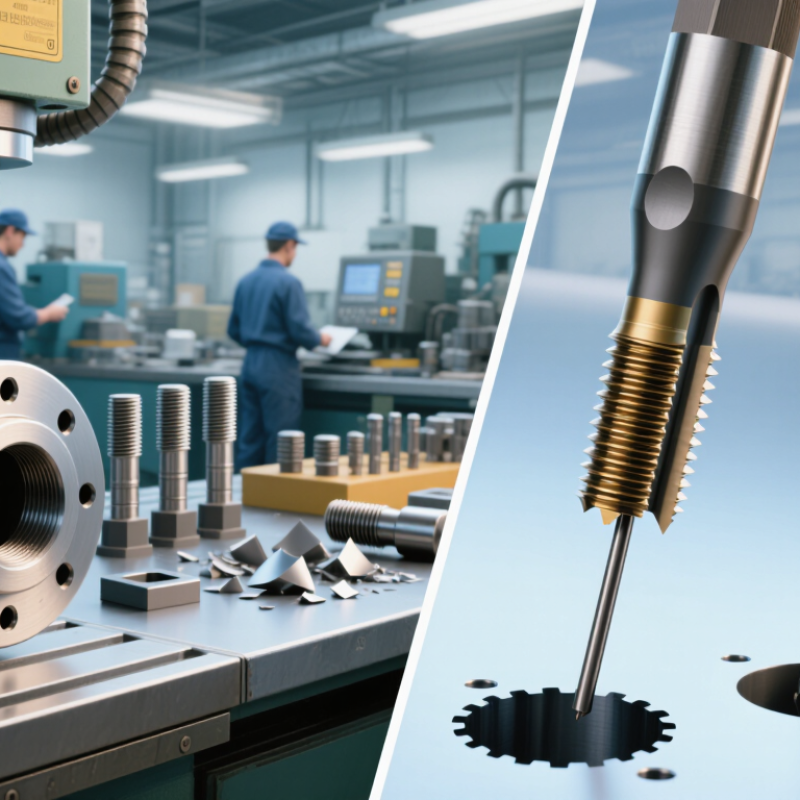
Tapping forms an internal thread with a tool that enters the hole axially. The cutting edges remove material along the entire thread profile. It is fast and economical for high-volume production. However, chips can gather inside blind holes. That risk increases in aluminum, stainless steel, and deep holes.
Thread milling uses a rotating cutter that follows a helical path. The cutter gradually creates the thread instead of forcing full engagement immediately. This method improves chip control and supports different thread diameters with one tool. It also suits large holes, difficult materials, and interrupted internal features. The trade-off is longer programming time and greater machine movement accuracy.
Global buyers should check thread standard, pitch, hole depth, material, tolerance, and annual quantity. Metric and inch threads are not interchangeable, even when their sizes look similar. Tapping often wins when cycle time matters most. Thread milling can reduce scrap when a tap breaks, because the damaged tool may be replaced without discarding the entire workpiece. In practical inspections, thread gauges, pitch checks, and clean deburring reveal problems early. Do not trust appearance alone.
A reliable decision needs real cutting trials. Tool life may change with coolant, machine rigidity, and operator settings. A chart can simplify the choice, but it cannot replace measurement. Even experienced teams sometimes select tapping too quickly. That mistake deserves review.
Tapping vs Thread Milling for Global Buyers?
Material choice should guide the tool decision, not habit. For carbon steel and cast iron, tapping usually gives the lowest cycle time. The tool follows the hole axis and forms a complete thread quickly. However, broken taps can stop production and damage expensive workpieces. A 2024 U.S. Cutting Tool Institute consumption report valued national cutting-tool demand at more than 2 billion dollars, showing why small process losses deserve attention.
Thread milling offers more control in aluminum, stainless steel, titanium, and hardened alloys. One cutter can produce several thread diameters with suitable programming. It also reduces cutting pressure and allows chips to leave the hole more freely. For deep blind holes, this advantage matters. I have seen operators choose tapping for speed, then spend longer removing a broken tool. That shortcut can fail.
Thread size changes the balance. Small threads below M6 often favor tapping, especially in high-volume production. Larger threads, unusual pitches, or expensive parts often justify thread milling. ISO 965 tolerances should guide the required fit, while ISO 230 testing principles support machine accuracy checks. Industry machining studies commonly report that thread milling can improve process flexibility, but results depend on rigidity, coolant delivery, and programming skill. Buyers should request tool-life data by material, hole depth, pitch, and batch size. Catalog speed tables are useful, but they are not production evidence. Testing remains necessary.
Comparing typical starting cutting speeds by material when selecting tools for different thread sizes.
The values show common starting-point cutting speeds in metres per minute. Tapping is often efficient for high-volume production and smaller thread sizes such as M3–M10, while thread milling provides greater flexibility for larger threads, thin walls, interrupted holes, and difficult materials. Actual speeds should be adjusted for tool material, coating, coolant, machine rigidity, pitch, and thread depth.
5 Tips: Tapping vs Thread Milling for Global Buyers
Evaluating Accuracy, Speed, and Production Efficiency
Tapping usually wins on cycle time for high-volume, straight-thread production. One tool creates the thread in a single axial pass. However, a broken tap can stop a production cell and damage a costly workpiece. Thread milling takes longer per hole, but it offers better process control. Operators can adjust thread diameter through programmed tool paths. That flexibility matters when buyers manage mixed materials, export specifications, and changing batch sizes.
Accuracy depends on more than the cutter. ISO 230-2 separates positioning accuracy from repeatability, so buyers should request both values from machine suppliers. Thread milling also reduces dependence on synchronized spindle reversal. This can improve control in difficult alloys or deep holes, although poor programming still creates pitch errors. Watch chip evacuation closely. Tiny chips can ruin a clean thread.
Production efficiency needs broader measurement. The 2024 Deloitte and Manufacturing Leadership Council survey reported that 86% of manufacturers view smart manufacturing as important for competitiveness within five years. That finding supports monitoring cycle time, tool life, scrap, and unplanned stoppages together. A practical trial should compare ten or more identical holes, record inspection results, and include tool-change minutes. Tapping may look faster on paper. Thread milling may produce fewer rejects. The cheaper process is not always the faster process.
| Evaluation Dimension | Tapping | Thread Milling | Buyer-Focused Guidance |
|---|---|---|---|
| 1. Typical cycle speed | Usually faster for high-volume production because the tool forms the complete thread in one synchronized axial movement. | Generally slower per hole because the cutter follows a helical path; cycle time increases with thread diameter and pitch. | Choose tapping when the same thread size is produced repeatedly and the machine can maintain reliable spindle synchronization. |
| 2. Dimensional accuracy | Can produce accurate threads when the tap, pilot hole, coolant, and machine synchronization are properly controlled. Errors can affect the entire thread at once. | Allows separate control of hole size and thread generation. A small radial tool-path adjustment can compensate for wear or tune the fit. | For close-fit, expensive, or difficult-to-replace components, thread milling normally offers more process adjustability. |
| 3. Thread-size flexibility | One tap normally produces one nominal thread size and pitch. A separate tool is required for each major thread specification. | One suitable milling cutter can often produce multiple diameters with the same pitch, provided the tool diameter and machine control are appropriate. | Thread milling can reduce tooling variety for mixed production and lower the risk of selecting the wrong dedicated tap. |
| 4. Blind-hole performance | Chip accumulation and bottom clearance can be concerns, especially with long-chip materials or insufficient relief at the bottom of the hole. | Usually provides better control in blind holes because cutting is intermittent and the tool can retract along a programmed path, leaving bottom clearance. | For deep blind holes, confirm flute geometry, coolant delivery, tool reach, and the required thread depth before purchase. |
| 5. Production efficiency and risk | Highly efficient in stable, repetitive production. A broken tap may damage the workpiece and can be difficult to remove, particularly in hardened or costly materials. | Often reduces scrap risk because the cutter is smaller than the finished thread and can be removed more easily if damaged. Requires a CNC machine capable of circular interpolation. | Evaluate total cost: cycle time, tooling inventory, scrap exposure, machine capability, operator skill, and the value of the workpiece. |
Note: Performance varies with material, thread standard, diameter, pitch, hole depth, tool geometry, coolant, machine rigidity, and programmed cutting conditions. The comparisons above are general manufacturing guidance rather than guaranteed specifications.
5 Tips: Tapping vs Thread Milling for Global Buyers?
Choosing Between Tapping and Thread Milling for Global Applications
Global buyers should compare tapping and thread milling against real production conditions, not price alone. Tapping usually suits high-volume work with stable hole sizes and consistent materials. It is fast, simple, and economical for common thread forms. Thread milling offers greater flexibility, especially when one tool serves several thread diameters. It also performs well in harder materials and interrupted holes.
Check five practical points before ordering. First, review the workpiece material and hardness. Tough alloys can overload taps quickly. Second, measure hole depth carefully, because chip evacuation becomes critical in deep holes. Third, confirm machine rigidity, spindle control, and interpolation accuracy. Fourth, compare batch size with tooling costs. Fifth, examine coolant access and the risk of tool breakage.
A tap can finish one hole in seconds. That advantage matters on large batches. Thread milling may reduce scrap when thread size changes often. It also allows damaged threads to be repaired more selectively. However, programming errors can create uneven pitch or poor surface quality. I have seen teams choose milling for flexibility, then underestimate setup time. That decision was not entirely wrong, but it needed better production data. For global applications, request sample testing, inspect thread gauges, and verify tolerances across different machines. No rule is perfect. Local operators may also favor the process they can control consistently.
Checking Machine Compatibility, Costs, and Supplier Support
Choosing tapping or thread milling starts with the machine, not the tool catalog. A tapping cycle needs accurate spindle synchronization and suitable torque. Thread milling needs controlled helical interpolation, enough axes, and stable tool holding. Check the controller, spindle range, coolant delivery, and workpiece rigidity before requesting quotations. Not every CNC machine handles both processes equally well.
Tapping usually costs less per hole and works efficiently in high-volume production. Thread milling can reduce scrap risks, especially in expensive materials or large diameter threads. It also allows one tool to cover several thread sizes, but programming and setup require more skill.
Tool life depends on cutting data, material hardness, and chip evacuation. Small details matter. A poor holder can erase the expected savings.
Supplier support should include compatible cutting data, sample programs, inspection guidance, and clear metric or imperial specifications. Ask how quickly technical questions receive answers. Request advice for worn tools, broken cutters, and inconsistent thread gauges.
In my experience, the cheapest quotation is not always the lowest production cost. One early estimate ignored programming time and rework, so the final cost was higher. That mistake still influences how I compare suppliers. Reliable partners explain limitations instead of promising universal performance.
Tapping enters the hole axially and cuts the full thread profile. Thread milling follows a helical path gradually. It needs more machine movement.
Tapping suits high-volume production with straight internal threads. It usually delivers shorter cycle times and lower tool costs. Speed matters here.
Thread milling suits large holes, difficult materials, deep holes, and interrupted internal features. It also helps manage mixed batches. Flexibility matters.
Chips can gather inside blind holes and damage the thread. This risk increases with aluminum, stainless steel, and deeper holes. Check chip evacuation carefully.
One thread milling cutter can support different thread diameters through programmed tool paths. The machine must maintain accurate movement. Programming errors still matter.
Thread milling allows operators to adjust thread diameter through programming. It reduces reliance on synchronized spindle reversal. Poor programming can still create pitch errors.
Record cycle time, tool life, scrap, stoppages, and tool-change minutes. Test at least ten identical holes. Paper speed can mislead.
Request positioning accuracy and repeatability separately. These values describe different machine behaviors. One number is not enough.
Use thread gauges, pitch checks, and clean deburring. Do not trust appearance alone. Tiny chips can hide serious defects.
Confirm thread standard, pitch, hole depth, material, tolerance, and annual quantity. Metric and inch threads are not interchangeable. A real cutting trial remains necessary.
Choosing between tapping and thread milling starts with understanding how each process forms internal threads. A tap creates threads in a single, direct operation, making it fast and practical for repetitive production and common thread sizes. Thread milling uses a rotating cutter to produce threads through controlled tool movement, offering greater flexibility for different diameters, materials, and thread profiles. For global buyers asking “what is the difference between tapping and thread milling,” the key factors include cutting force, chip control, accuracy, and process adaptability.
Tool selection should match the workpiece material, thread size, required tolerances, and production volume. Tapping may provide higher speed, while thread milling can reduce the risk of tool breakage and simplify correction or replacement. Buyers should also evaluate machine compatibility, spindle control, programming requirements, total operating costs, and supplier support. A reliable decision balances productivity with long-term flexibility, ensuring the selected method performs consistently across different manufacturing environments and application needs.

Tier Tool